
While I enjoy scrolling through and posting on social media as much as the next person, I find the complex ways it has come to alter traditional human experiences to be fascinating.
For example, the impermanence of death used to be something we could count on to be a sure thing. However, social media has erased this, the digital footprint we leave behind either serving as an online memorial or to be maintained by family/loved ones.
Oddly enough, this problem exists for celebrities who passed away long before social media existed.
I was scrolling through Instagram when I came across the official account of Freddie Mercury in my list of suggested people to follow, the verified account immediately catching my eye.
Defining “delebs” and ethical questions
Researcher Denver D’Rozario refers to these as ‘delebs’, “biologically dead, but his/her distinctive appearance, gestures, image, likeness, mannerisms, name, photograph, signature, voice and works can continue to be used posthumously for various purposes.”
I quickly realized that accounts like this were for delebs who passed long before the creation of the social media they are present on, never having ownership of the account or control of what’s posted on their behalf.
D’Rozario has studied the ethics of these posthumous careers, coining the concept of ‘deontological ethics’. “Briefly, the deontological view of ethics looks at the inherent rightness or wrongness of an action (regardless of consequences) and are idiosyncratic to each person,” D’Rozario explains. He continues by saying that “The deontological view makes the assumption that it is ethically wrong for anyone to unjustly reap where they have not sown.”
The way social media has allowed people to speak on behalf of delebs with such prestigious reputations appears dangerous, running the risk of altering their careers and legacies left intact when they passed. While dealing with a deleb’s account once they’ve passed may be complicated, resurrecting those who didn’t live in a world with social media feels risky as their image/likeness is inserted into a digital space they could have wanted no part in, should they be alive to have made that choice.
Online, but not by choice
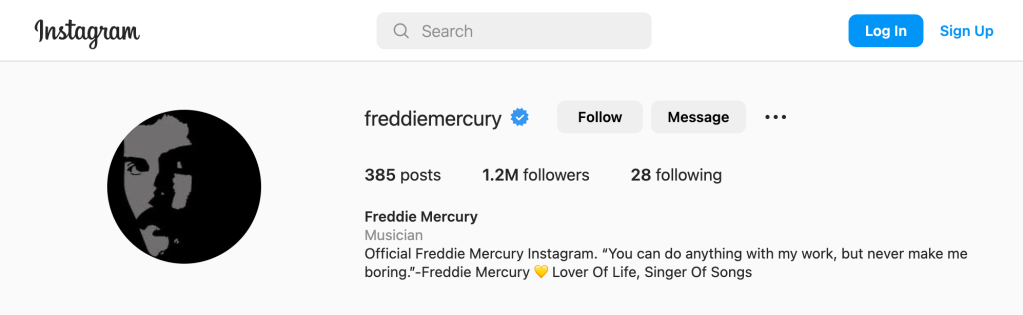
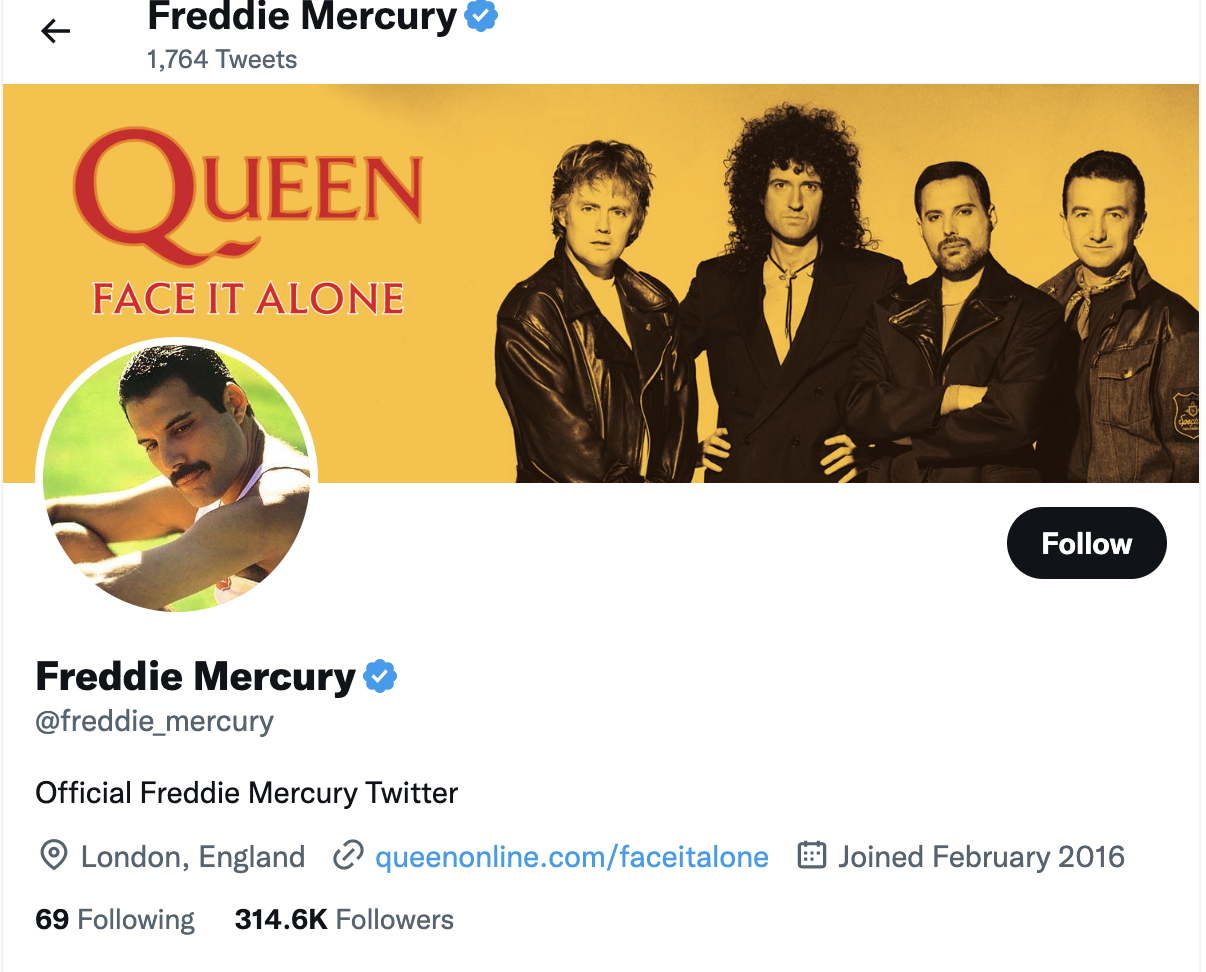
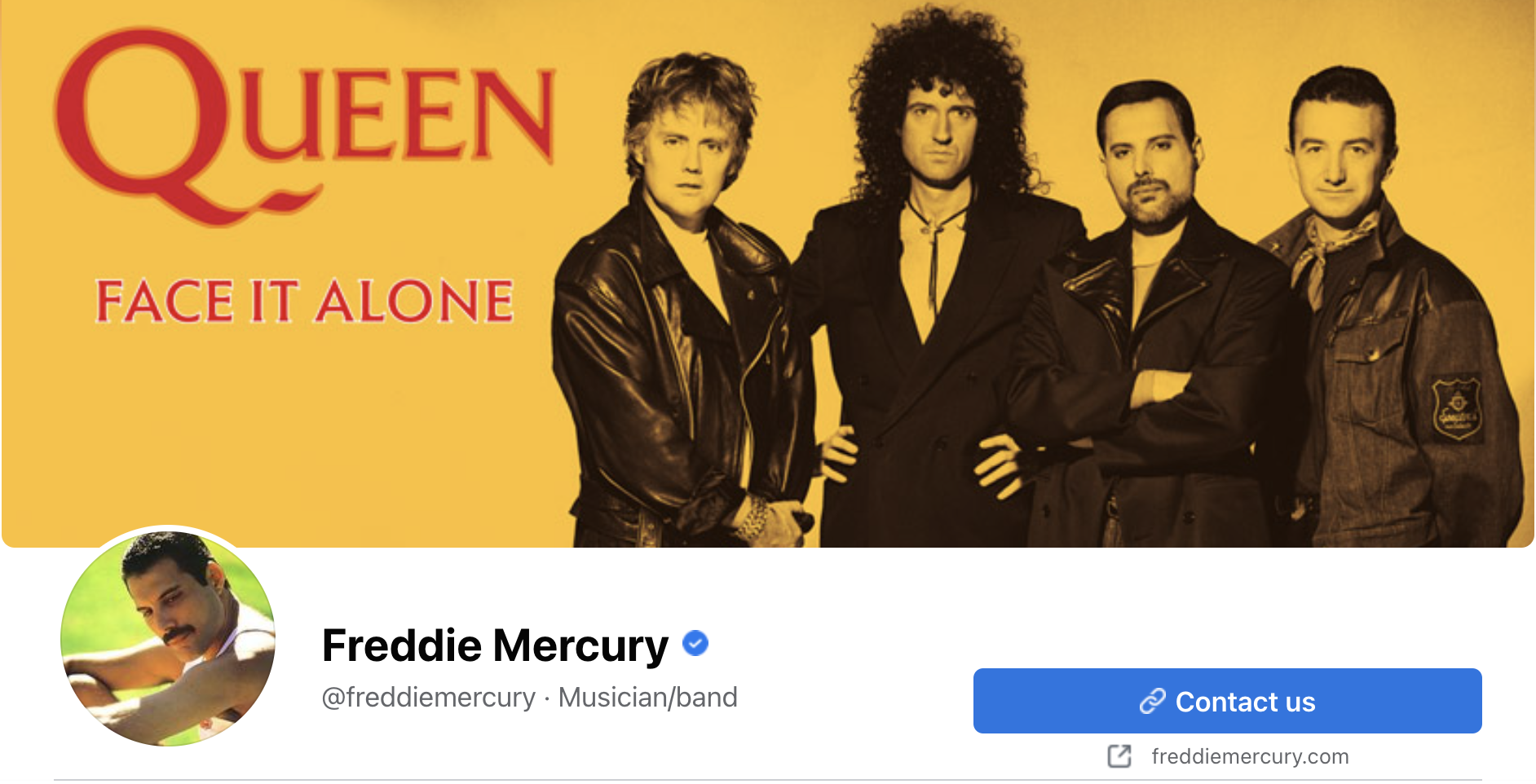
In 2017, fellow Queen member Brian May did an interview with the Sunday Times where expressed his belief that Freddie Mercury wouldn’t have taken part in social media. “I don’t think he’d have the patience for social media,” May says in reference to Mercury. “He was very private, and I think that would have continued,” May continues when talking about Mercury’s lifestyle. Despite the opinions of people who knew delebs such as Freddie Mercury best, he has verified social media accounts on platforms including Instagram, Twitter and Facebook, each with several million followers.
Final Thoughts

These accounts pose an interesting question when looking ahead at the ways this already dangerous idea has the potential to evolve in whatever the next social media endeavor may be. Who knows, maybe we will take things one step further in their digital resurrection and meet and interact with these ‘delebs’ in the metaverse.
 Julia's Blog